
Leon Thomas has completed his unlikely ascent from Broadway child star to Grammy-award-winning R&B virtuoso. The 32-year-old New York native, who worked extensively as a highly productive producer for Drake, Ariana Grande and Post Malone, has established himself as one of the music industry’s most thrilling breakthrough artists following the release of his 2024 album Mutt. Last month, Thomas claimed two Grammy Awards from six nominations, including best R&B album and best traditional R&B performance, solidifying his transition from studio-based contributor to chart-topping solo performer. His meteoric rise has caught the attention of music royalty: Stevie Wonder specifically invited his participation in a Rock and Roll Hall of Fame tribute, whilst George Clinton presented him with custom headgear at Coachella. At 32, Thomas is bridging generations and reshaping contemporary R&B with a fearless Prince-inspired approach.
The Surprising Path from Nickelodeon to Grammy Recognition
Leon Thomas’s journey towards R&B stardom commenced in the most unexpected places: the glittering world of Broadway and the productions of Nickelodeon shows. Before performing at sold-out venues and collaborating with Stevie Wonder, Thomas was a child performer, developing his talent in the showbusiness’s most prominent mainstream spaces. Yet instead of becoming typecast as a former child star, he intentionally moved to focus on record production, working out of the spotlight with some of the industry’s biggest names. This apprenticeship became invaluable, allowing him to acquire a detailed knowledge of contemporary R&B whilst staying mostly out of the public eye.
The shift from producer to frontman might have seemed risky, but Thomas’s 2024 album Mutt revealed an artist completely developed and poised for the world stage. The project’s opening track, “Mutt”—a playful, funk-driven celebration that brought him the fond title “the dog song kid”—became his defining moment. What makes Thomas’s ascension especially notable is his unwillingness to follow trends or sacrifice his creative vision for commercial appeal. Instead, he’s found influence from funk pioneers like George Clinton and soul pioneers like D’Angelo, building a sound that sounds both enduring and strikingly current. His Grammy accolade affirms not just market success, but genuine artistic credibility.
- Nickelodeon and Broadway child performer before pursuing music
- Spent years as producer for Drake, Post Malone and Ariana Grande
- Debut album Mutt dropped in 2024 to critical acclaim
- Secured two Grammys from 6 nominations in February 2025
Merging Rock and Soul: A Musical Philosophy
Leon Thomas’s creative approach embodies a intentional blending of rock’s unpolished power with soul’s emotional depth—a combination that seems increasingly uncommon in modern R&B. Rather than compartmentalising these genres, Thomas views them as complementary forces, pulling inspiration from the expansive funk sound of George Clinton and the reflective soul work of D’Angelo. His readiness to dissolve boundaries demonstrates a sophistication that transcends generational divides. By collaborating with legends like Stevie Wonder and Mariah Carey, Thomas has positioned himself not as a mere trend-chaser but as a accomplished artist participating in meaningful artistic dialogue with the icons who influenced modern music.
What makes distinctive Thomas’s approach is his resistance to contemporary R&B’s profit-driven demands. His music embraces both the sacred and the profane with Prince-like boldness, carving out space for vulnerability paired with celebration. The “Mutt” persona—cheeky, unapologetic, rather unpolished—allows Thomas to examine themes of desire and heartbreak without affectation. This artistic honesty particularly appeals to audiences fatigued by meticulously managed social media personas. Thomas appreciates that at times the deepest artistic expressions come delivered through humour and irreverence, a lesson he’s clearly absorbed from his funk and soul influences.
The Impact of Iconic Guitarists
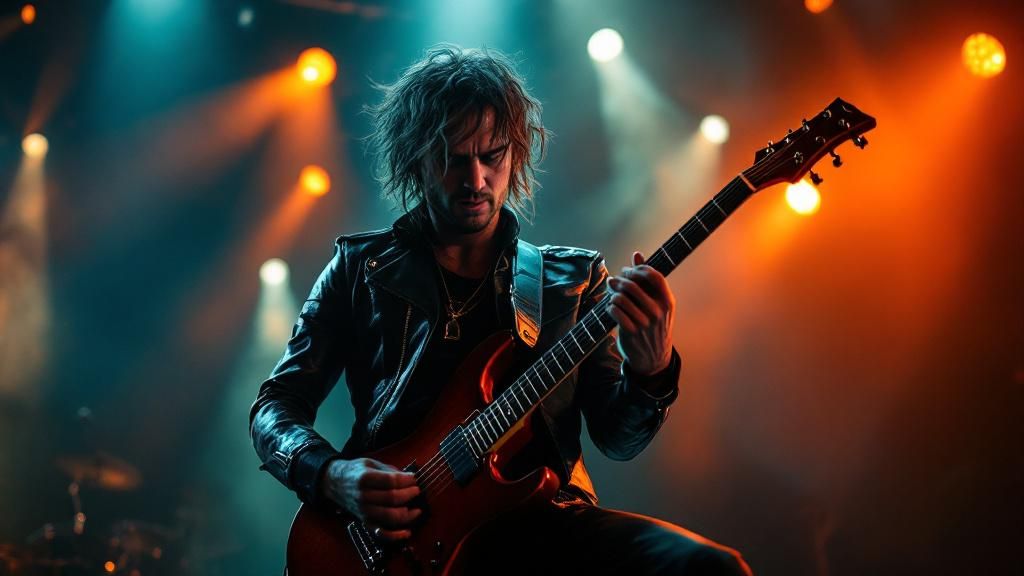
Thomas’s guitar work has grown integral to his identity as a independent performer, setting him apart from countless producers-turned-singers. His solos demonstrate instrumental skill combined with emotional restraint—he never overplays a moment or relies on unnecessary flourishes. This measured style reflects close examination of guitar heroes who understood that the instrument’s power lies not in speed but in intentionality. Whether accompanying his own vocals or delivering instrumental passages, Thomas’s guitar playing anchors his songs in authenticity, establishing a tactile quality that feels ever more valuable in an age of electronic production prevalence.
The connection between Thomas’s playing style and traditional rock music cannot be overstated. He’s learned from players who understood the instrument as a means of narrative expression rather than mere technical display. His appearances at locations such as the Rock and Roll Hall of Fame tribute showcased his ability to honour established musical conventions whilst bringing contemporary sensibility to established works. This respectful yet innovative approach has gained him respect from seasoned performers and opened doors that might otherwise remain closed to emerging musicians still establishing their careers.
- Guitar solos merge technical skill with emotional restraint and intentionality
- Influences stemming from traditional rock and soul guitar traditions and innovators
- Performance style respects musical heritage whilst bringing contemporary relevance
The ‘Doggie’ Persona: Fragility Combined With Bravado
Leon Thomas’s landmark single “Mutt” brought to public attention what he calls his “doggie” persona—a consciously lighthearted, somewhat irreverent character that obscures more profound emotional realities. George Clinton’s validation of this identity, featuring the custom foxtail hat, endorsed Thomas’s creative impulse to merge the funny and the genuine. This persona enables him to address subjects including romantic vulnerability and desire without surrendering to sentimentality. By employing an highly stylised, almost absurd aesthetic, Thomas establishes mental separation that counterintuitively connects audiences with his genuine emotional centre. The strategy demonstrates itself remarkably successful in contemporary R&B, where genuine feeling without irony often feels naive.
The “doggie” character serves as both shield and mirror, allowing Thomas to examine aspects of human experience that might otherwise feel too exposed. As he himself remarks, “A broken heart can turn somebody into a bad Casanova”—a statement that conveys the wounded ego beneath the bravado. This awareness of how pain manifests as performative confidence grants his music unexpected depth. Rather than presenting himself as either wholly vulnerable or entirely self-assured, Thomas navigates the productive tension between these poles. The result is music that confronts the messy, contradictory nature of desire and heartbreak, striking a chord with audiences tired of one-dimensional emotional presentations.
Combining Gentleness and Confidence
Thomas’s capacity to maintain poise between softness and confidence distinguishes him from artists who lean too much in either way. His guitar work provides the structural basis for this balance, offering passages of delicate restraint paired with stretches of confident control. Vocally, he moves between emotional vulnerability and spirited assertion, refusing to let either quality to hold sway fully. This balance calls for considerable artistic maturity—the openness to risk looking foolish whilst keeping emotionally honest. For a 32-year-old artist still in the early stages of his solo career, such refinement indicates an artist who has learned from studying masters like D’Angelo, recognising that genuine strength resides in embracing contradiction rather than resolving it.
Mentorship and the Significance of Legacy
Thomas’s rise to R&B success has been substantially formed by proximity to seasoned experts. Working behind the scenes with Drake, Ariana Grande and Post Malone gave him an invaluable education in modern production techniques and songwriting. Yet it is his recent collaborations with revered masters that have substantially reshaped his artistic path. The endorsement of Stevie Wonder—who personally requested Thomas perform at a Hall of Fame tribute to Sly Stone—represents a meaningful recognition from one of the genre’s most respected pioneers. Such instances hold significance beyond mere professional achievement; they signal generational transmission of artistic standards and stewardship.
The influence of D’Angelo looms particularly large in Thomas’s artistic sensibility, demonstrated by his approach to reconciling instrumental mastery with emotional vulnerability. Having witnessed how D’Angelo navigates the tension between authentic soul expression and current production methods, Thomas has cultivated a refined comprehension of what current R&B requires of its artists. This influence—whether immediate or gained through careful study—has provided him with the artistic maturity needed to uphold R&B legacy whilst carving out his own unique direction. The weight feels greater precisely because he draws from the shoulders of giants.
| Mentor Figure | Key Influence |
|---|---|
| Stevie Wonder | Spiritual guidance and validation of artistic integrity |
| George Clinton | Funk legacy and fearless creative expression |
| D’Angelo | Balance of technical mastery and emotional authenticity |
| Sly Stone | Genre-defying innovation and cultural significance |
Upholding R&B Greatness
The responsibility of carrying forward R&B’s heritage is not lost on Thomas, particularly given his recent Grammy recognition and the explicit encouragement from veteran figures of the genre. His understanding of this weight manifests in his careful attention to craft—the careful calibration of his “doggie” persona, the considered deployment of his guitar work, the deliberate choice of collaborators. Thomas understands that his rise to prominence arrives at a time when R&B itself faces questions about authenticity and direction. By demonstrating that modern R&B can be both playful and profound, technically skilled and emotionally resonant, he provides a blueprint for how the genre might develop without compromising its soul.
The Evolution of R&B in an AI Period
As artificial intelligence increasingly infiltrates the music industry, Thomas finds himself at a pivotal moment where his human artistry becomes increasingly essential. The proliferation of algorithmic composition and machine-produced singing has sparked meaningful debate about authenticity in modern R&B. Thomas’s commitment to acoustic instrumentation, raw emotional expression, and the messy realities of human experience positions him as a contrast with the clinical precision that technology can produce. His award recognition underscore what audiences are hungry for: genuine connection and craft that cannot be replicated by machines.
Yet Thomas stays pragmatic about technological advancement, neither dismissing nor wholly embracing the tools at his disposal. His approach reflects a distinctly human quality—the understanding that imperfections, spontaneous elements, and unexpected instances of creative collaboration are precisely what make music transcendent. Whether playing with legends or creating personal recording sessions, Thomas embodies the principle that R&B’s tomorrow depends not on technical complexity but on the emotional resonance an artist can channel through their instrument. In this sense, his “doggie” persona and all its contradictions may be the most honest response to our contemporary moment.
- Acoustic performance remains irreplaceably valuable in a progressively digital environment
- Emotional authenticity can’t be synthesised or algorithmically generated
- Human collaboration creates unpredictability that technology cannot replicate
- R&B’s legacy depends on artists who prioritise soul over technical perfection
